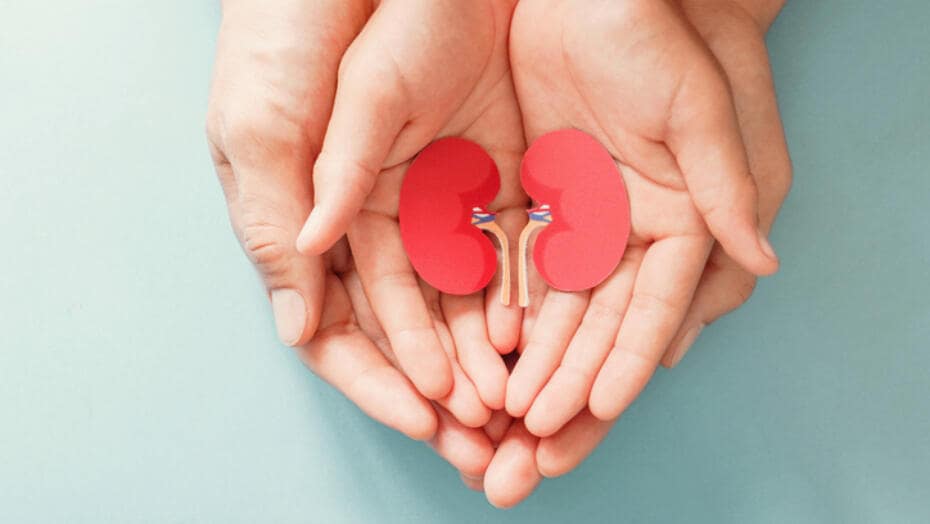
FAQ's For Living Donors
Asking for a kidney is a big deal and is considered a “Gift of Life”. Your safety, privacy and protection are just as important to me as they are to the Transplant Team. Living kidney donors can be blood relatives, non-blood relatives, friends and altruistic donors. Below are some FAQs to address your concerns.

Is the living donor procedure safe?
Yes, living kidney donation overall is safe and is done by a minimally-invasive surgical technique called laparoscopic surgery which minimizes surgical incisions and reduces recovery time. In healthy individuals, donating a kidney will not raise your risk of kidney failure, diabetes or other health problems. People with only one kidney can expect to live a full, healthy normal life. Kidney donation typically does not affect the ability to become pregnant and have a safe pregnancy and childbirth. You should be able to go back to your regular diet and normal exercise program soon after the kidney donation. A living donor can donate one of his or her kidneys and the remaining kidney is able to perform all the necessary functions.

Is the procedure painful?
By using laparoscopic surgery, the procedure allows for a shorter hospital stay and quicker recovery time. Benefits of this technique include shorter hospitalization and a rapid return to normal activity. After kidney donation and a short hospital stay of approximately 1-2 days, most people are able to return to their regular daily activities after 2-4 weeks.

What are the criteria for eligibility to be a living kidney donor?
- Age 18 years or older
- Healthy (Physically, Mentally & Emotionally)
- Two well-functioning kidneys
- Blood work
- Body Mass Index (BMI) below 35
- Medical evaluation at the transplant center
- Imaging studies and medical tests as required

What is the evaluation process for kidney donation?
After you register online and complete the health questionaire as a potential donor, you will be contacted by a Living Donor Coordinator to answer all your questions and who will guide you through the transplant team evaluation process. During your clinic evaluation, you will have lab work done and meet with nurses, social workers, nephrologists, surgeons and transplant coordinators to assess your health and eligibility. Your Living Donor Coordinator will also discuss additional tests that will be required as part of the evaluation process.

Does insurance cover expenses for a living donor?
Yes, all medical expenses related to evaluation, surgery, hospitalization, & follow-up care are covered under my own personal health insurance. There is NO COST TO YOU or your health insurance company. More information will be provided to you during the consultation.

What if I’m not a match?
If you are eligible to donate but not a direct match, you can still be my donor! There are several ways to donate. The National Kidney Registry has a detailed overview of the options. The main three are:
Direct Donation
The donor is compatible with the recipient and can therefore give directly (healthy, blood type, and tissue typing test match).
Paired Swap
Incompatible donor and recipient pairs are matched with another incompatible duo for a one-to-one exchange, or ‘swap’.
Chain Donation
This is a type of paired exchange where multiple donor/recipient pairs are involved to ensure everyone gets their match.

Is a living donor kidney transplant your only option?
Dialysis therapy filters and purifies the blood using a machine. It is not a cure and comes with many long-term health risks. It also puts a strain on the body due to the rapid changes in fluid, electrolytes and waste levels. Dialysis causes heart inflammation, anemia, blood pressure issues, and nerve damage, to name a few. It really isn’t a suitable replacement for a healthy well-functioning organ. For most it is a temporary solution while they wait for a transplant.
Statistics show that after 5 years on dialysis, less than 50% of patients are still living, while 80% of patients that received a kidney transplant are still living.
A kidney from a deceased donor is possible, but the waiting list is between 3-7 years and is typically not as healthy as a kidney from a living donor. I'm on 3 separate transplant waiting lists in my area (NYU-Langone in NYC, as well as Hackensack and Cooperman-Barnabas in New Jersey). The wait time is an average and no guarantee, and while waiting, the kidney disease and dialysis treatments deteriorate cardiovascular and overall health to the point that annual medical recertifications to be able to remain on the waiting list are often failed, requiring more waiting time and alternate treatment to try to get back on the lists. Currently there are more than 90,000 people waiting on a kidney transplant list in the United States and surviving kidney disease and dialysis is a race against time which many people unfortunately lose. An average of 13 people die every day while waiting for a transplant.
The best option is a living kidney donor transplant.

I don’t see my question listed here…. What should I do?
Feel free to send me an email to learn more.Mark Whitmore